
When deciding whether to start an LLC vs Nonprofit. You need to be aware of how it changes your website structure. And your overall marketing journey.The structure of a website determines whom the organization serves. How it raises money, what promises it may make. The website must also persuade visitors to accomplish a certain call to action. An LLC earns revenue by selling products or services to customers. A nonprofit advances a public mission and may rely on donations, grants, volunteers. Because those operations may be different, the marketing, payment systems, banking arrangements, and website design should be different as well. And here at MyDigitalMarketinghelp .We always get questions regarding the structure of websites. Especially when it comes to how a website should look to represent a Nonprofit vs an LLC. 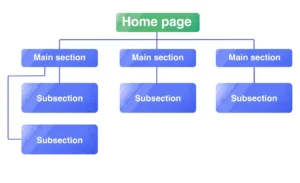
LLC vs NonProfit Website Structure and its impact
Before you make the decision to start an LLC or NonProfit. Decide what kind of impact you want to have and how the organization will sustain that work. Humanitarian work does not automatically turn into a charitable cause. And a personal career cannot become a nonprofit mission just because it benefits other people.
A nonprofit must serve an eligible public purpose and cannot be organized primarily to enrich its founder. An LLC, by contrast, may pursue a socially beneficial mission while still operating as a commercial business and earning profits for its owners. Its important to talk about this because it prevents one of the most common mistakes: A founder may care deeply about research, advocacy, education, or community development. But may feel confused about the overall functions of the organization. Such as being able to sell services,conduct studies,apply for grants, or combine several funding methods. That is why when comparing the LLC vs Nonprofit Website structure. One must visualize the operations of each one to properly design the right website. 
The Customers vs Donors
The most important difference of an LLC vs Nonprofit website structure. Is the relationship each has with its audience.An LLC markets to its customers. A Nonprofit markets to a broader group that may include donors, volunteers, beneficiaries, community partners. When designing the website structure of either one. Its has to be properly optimized SEO, establish credibility through articles and content marketing. As well have a good theme that makes it look functional and give it a nice visual appeal. 
The CTA or otherwise known as the call-to-action. Is also the important factor that both websites should have. However, the way it is presented is different. For an LLC, strong calls to action might include “Schedule a Consultation,” “Request a Quote,” “Shop Now,” or “Start Your Project.” On the other hand, a Nonprofit might include “Donate,” “Volunteer,” “Join the Newsletter,” “Attend an Event,” But whether your marketing an LLC or a Nonprofit. Success is measured not only by website visits but by trust,awareness,reach, and long-term growth.
Website Design For Non-Profit
A nonprofit website should serve as the organization’s digital headquarters. Explaining its mission, demonstrating its impact, and turning visitors into donors, volunteers,followers and supporters. One Thousand Schools provides a useful example:its website presents its education mission in Honduras and gives visitors ways to donate, volunteer, and support school-building projects. And when discussing the differences of an LLC vs a Non-profit website structure this is one of the main characterestics.
The homepage introduces One Thousand Schools’ mission to reduce poverty and violence in Honduras through education and youth empowerment. It uses statistics, impact figures, program summaries, and community stories to explain the problem and establish credibility. Its digital marketing purpose is to capture attention, build emotional interest, and guide visitors toward donating, volunteering, or learning more about the organization. 
The Our Story page explains how Shin Fujiyama’s volunteer experience developed into Students Helping Honduras and eventually One Thousand Schools. Its timeline highlights important milestones, including the creation of Villa Soleada, school construction projects, organizational growth, and the 2022 rebrand. Its marketing purpose is to humanize the nonprofit, demonstrate its longevity, and reassure potential donors that it has a substantial record of completing projects. 
The Our People page introduces the organization’s staff, educators, construction workers, children’s-home personnel, and board leadership. It emphasizes that Honduran professionals lead the organization’s programs and work directly within their communities. Its marketing purpose is to establish transparency, demonstrate local leadership, and help donors, volunteers, and partners trust the people responsible for managing the organization’s programs and funds. 
Website Design For an LLC
On the other hand. An LLC should have a website built around the buying process of past,current or future potential customers. The best example for this would be pella windows & doors of connecticut.
The Windows section functions as both a product catalog and an educational resource. Visitors can explore windows by operating style—such as casement, awning, double-hung, sliding, bay, and bow—or compare materials including wood, fiberglass, vinyl, and aluminum. Inspiration galleries, replacement guidance, reviews, and before-and-after projects help customers understand their options before buying. From a digital-marketing perspective, this structure attracts people searching for specific products, answers their questions, and gradually moves them toward shopping online or scheduling an appointment. 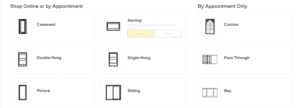
The Doors section divides visitors according to two distinct buying needs: front doors and patio doors. Customers can compare materials, configurations, colors, styles, features, replacement options, and completed projects. Front-door content emphasizes security and curb appeal, while patio-door content focuses on natural light, outdoor access, and configurations such as sliding, French, bifold, and multi-slide doors. This segmentation supports SEO for highly specific searches while giving customers enough visual inspiration and practical information to feel confident taking the next step. 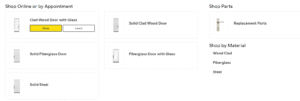
The Where to Buy page is the final conversion point in Pella’s customer journey. It gives visitors three clear paths: schedule a free in-home consultation, find a nearby showroom or authorized seller, or purchase selected products online. Its ZIP-code search connects national product marketing with local showrooms, certified contractors, Lowe’s stores, lumberyards, and building suppliers. This page supports local SEO while accommodating different buying preferences—from homeowners seeking full measurement and installation services to customers managing smaller do-it-yourself projects.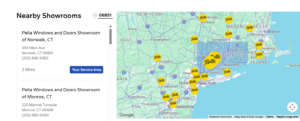
Choosing Website Hosting
The best hosting provider is not determined by entity type alone. Both LLC and nonprofit websites need dependable uptime, HTTPS, regular backups, software updates, and secure administrator access. The right plan also depends on whether the site uses WordPress, an online store, embedded donation forms, appointment scheduling, video, or custom applications.
However, organizations should compare more than the advertised monthly price. Free hosting may exclude domain registration, premium email, advanced backups, donation tools or other essential services. Some offers also require a provider credit on the website or renew later at the standard price. An LLC normally pays regular commercial hosting rates, while a nonprofit may reduce its expenses through a verified program. In either case, the hosting provider should offer dependable support, SSL security, backups and enough capacity to meet the website’s long-term needs.
Payment Processing for an LLC vs a Nonprofit
Payment processing should follow the legal identity of the organization receiving the funds. An LLC accepts commercial payments for products, services, retainers, subscriptions, or event registrations. A nonprofit accepts donations and may also receive program fees, membership dues, or ticket revenue. The checkout page should state what the payment represents, identify the recipient, and explain whether any portion may be tax-deductible. A payment to an ordinary for-profit LLC is not a tax-deductible charitable contribution.
Stripe vs Zeffy

Stripe is a general payment processor used by businesses and nonprofit organizations. It supports one-time and recurring payments, hosted payment links, digital wallets, invoicing, subscriptions, and custom integrations. Pricing varies by country, payment method, and account arrangement, and eligible nonprofits may be able to request discounted processing rates. Stripe is therefore a flexible choice for an LLC and can also work for a nonprofit that needs customized payment flows or integrations.
Zeffy is a fundraising platform built for eligible nonprofit organizations. It advertises no platform, card, or transaction fees to the organization and supports functions such as donation forms, fundraising campaigns, event ticketing, memberships, donor management, and automated receipts. Its model is supported by optional contributions that donors may choose to give Zeffy during checkout. Eligibility and availability should be confirmed directly with Zeffy, and funds must be paid to an organizational bank account that satisfies its verification requirements.
For an LLC, Stripe or another commercial processor such as Square or PayPal is the appropriate category of service. For an eligible nonprofit, Zeffy may reduce processing costs and administrative work, while Stripe may provide more control for custom technology. The choice should consider donor experience, integrations, reporting, international availability, payout timing, recurring gifts, chargeback handling, data portability, accessibility, and the organization’s ability to manage the system. The lowest advertised fee is only one part of the decision.
Bank Accounts for an LLC vs a Nonprofit
For nonprofits seeking a low-cost account for everyday banking, U.S. Bank Nonprofit Checking is a strong option. The account currently has no monthly maintenance fee or minimum-balance requirement, although at least $25 is needed to open it. It includes 1,800 free transactions and 300 free cash-deposit units per calendar year, along with online banking, mobile check deposits, bill payment and a business debit card. Organizations that exceed the annual allowances will pay additional transaction or cash-deposit fees, so nonprofits with heavy banking activity should compare those limits with their expected volume before opening an account.
For a small LLC, particularly a home-based or digitally operated business, U.S. Bank Business Essentials is a strong general-purpose checking account. It has no monthly maintenance fee, includes unlimited digital transactions and provides 25 free teller or paper transactions per statement cycle. It also includes mobile banking, mobile check deposits and payment-acceptance tools. However, only 25 cash-deposit units are included each month, so an LLC that handles large amounts of cash should compare alternatives such as Chase Business Complete Banking. For an LLC receiving most of its payments electronically, U.S. Bank offers a practical combination of low costs, branch access and everyday business-banking features.
LLC vs Nonprofit Website structure Conclusion
LLC vs nonprofit marketing begins with organizational truth. The website, domain, hosting, payment processor, bank account, and calls to action should all reflect the entity that actually performs the work and receives the money. An LLC should market value to customers and earn revenue through legitimate commercial transactions. A nonprofit should communicate public benefit, demonstrate accountability, and invite supporters to participate through approved charitable channels. When both entities exist, clear separation protects donors, customers, founders, and the credibility of the mission.
Founders should verify formation, fundraising, tax, and banking requirements with qualified legal and accounting professionals in the jurisdictions where they operate. Platform features, eligibility rules, and prices also change, so current terms should be reviewed before any website or payment system goes live.

Digital marketing strategy across SEO, AI search, paid media, analytics, conversion optimization and WordPress.