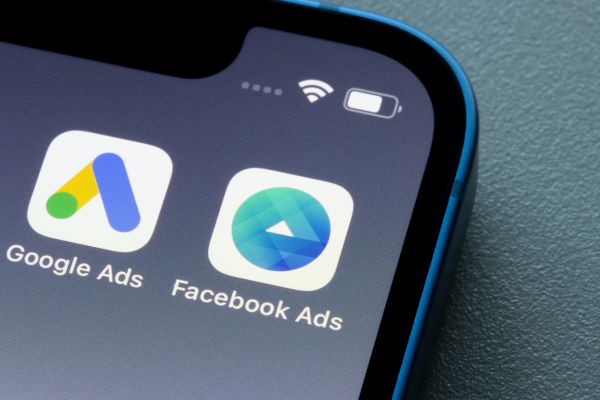
Digital marketing is essential for all types of businesses, whether B2B or B2C. However, a common question business owners may face is how to start advertising with Google Ads or Facebook Ads (through Meta Ads Manager). Before comparing Google Ads vs. Facebook Ads, your business should answer the following questions:
- Are my customers actively searching for this, or do I need to introduce it to them?
- Is my product highly visual?
- What is my immediate budget and tolerance for lead costs?
- Do I want immediate sales or long-term brand awareness?
In this article, we will answer these questions for business owners who are deciding between Google Ads and Facebook (Meta) Ads.
Google Ads vs. Facebook Ads: Understanding the Key Differences
Both Google Ads and Facebook Ads help businesses reach potential customers, but there are key differences when it comes to customer intent. One of the questions mentioned in the introduction was, “Are my customers actively searching for this, or do I need to introduce it to them?”
Google Search Ads primarily help businesses reach people who are actively searching for specific products, services, or solutions. On the other hand, Facebook Ads allow businesses to reach potential customers through social media, even if those individuals aren’t actively searching for their products.
To decide which advertising platform to invest in, your business should understand the importance of customer behavior and intent.
How Does Google Ads Work?
Google Ads has many core campaign types, including Search campaigns, Performance Max campaigns, Display campaigns, Shopping campaigns, Video campaigns, Demand Gen campaigns, App campaigns, and Smart campaigns, as well as Local Services Ads (LSAs).
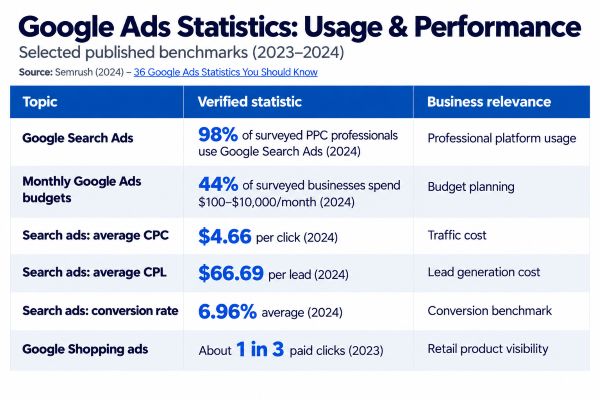
According to Semrush’s 36 Google Ads statistics, 98% of surveyed PPC professionals use Google Search Ads, so we will focus on this campaign type since it is relevant to many businesses.
Google Ads Search campaigns use keyword targeting to reach potential customers. Your business chooses specific words or phrases (keywords) related to your products or services that people search for on Google. When a person searches for terms related to your targeted keywords, your text ad may appear near the top or bottom of the search results page, labeled with a small “Sponsored” tag.
With most Search campaigns, your business pays when a user clicks on your ad to visit your website or call your business. Your business competes with other advertisers who are also targeting similar keywords through Google’s advertising auction system.
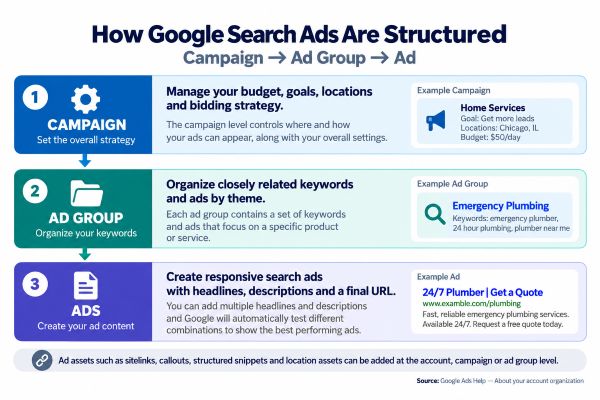
The three main components of a Google Search campaign are:
- Campaign Level: The foundation where you manage your overall budget, goals, location targeting, and bidding strategy.
- Ad Group Level: A group within the campaign where you organize your keywords and ads into closely related themes.
- Ads Level: This is where you create text ads consisting of headlines, descriptions, and final URLs. You can also configure tracking options and use relevant ad assets, such as images and sitelinks, which may be managed at different levels of your account.
Is Google Ads Right for Your Business?
Google Ads can help answer the following questions introduced at the beginning of this article.
- Are my customers actively searching for this, or do I need to introduce it to them? If search demand is high, you can find and research relevant keywords that can later be used to create a Google Ads Search campaign. Other campaign types, such as Display and Video campaigns, can help build brand awareness by introducing your products to people who are not familiar with your company.
- Is my product highly visual? If your product is highly visual, you can use image assets in eligible Search ads, as well as in Display, Performance Max, Demand Gen campaigns, and more.
- What is my immediate budget and tolerance for lead costs? Google Ads can have a higher cost per lead depending on your industry, keyword competition, and targeting. You may need a larger budget and sufficient time to optimize your campaigns before seeing consistent results.
- Do I want immediate sales or long-term brand awareness? Google Ads can help generate sales more quickly because you’re targeting keywords that customers are actively searching for on Google. However, immediate sales are not guaranteed, and other Google Ads campaign types can also help build long-term brand awareness.
How Do Facebook Ads Work?
Facebook Ads are managed directly through Meta Ads Manager. The platform helps businesses reach potential customers through audience targeting, including demographics, interests, behaviors, and automated targeting. Businesses can also use the Meta Pixel to retarget website visitors and help create lookalike audiences..
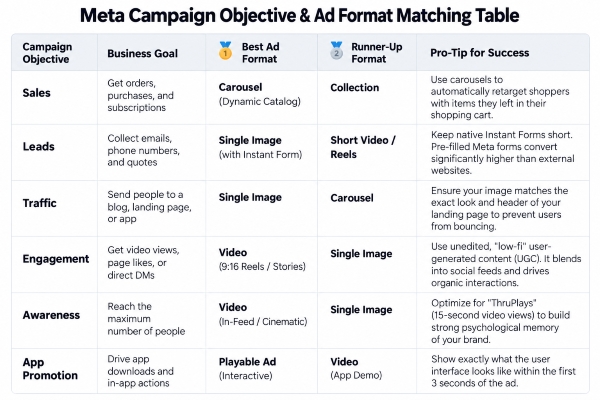
Facebook Ads offer different placements and formats, including Stories, Reels, Messenger, single-image ads, video ads, and carousel ads. Choosing the right advertising format depends on your business’s campaign objective.
Facebook Ads offer different placements and formats, including Stories, Reels, Messenger, single-image ads, video ads, and carousel ads. Choosing the right advertising format depends on your business’s campaign objective.
For example, a home improvement company may want to generate leads by collecting email addresses and phone numbers. The image below shows how Meta campaign objectives align with business goals and ad formats.
Facebook Ads operate through an advertising auction system where your business competes with other advertisers across Meta’s platforms. Similar to Google Ads, the three main components of a standard Facebook advertising campaign are:
Campaign Level: This is where you set your campaign objective, whether you want website traffic, sales, lead generation, or brand awareness. Meta uses an auction system to determine which ads are shown to users.
Ad Group Level: At this level, you set audience targeting options, which may include age, gender, location, language, specific interests, behaviors, and custom or lookalike audiences. Next, you can configure ad placements, budget and scheduling, and bidding and optimization settings. Some of these settings may also be managed or automated at the campaign level.
Ad Level: This is where you choose your ad format. In our example, we’re using a standard single-image ad. This is where you upload images or videos, create ad copy, and add headlines and descriptions.
Are Facebook Ads Right for Your Business?
Facebook Ads can help answer the following questions introduced at the beginning of this article.
- Are my customers actively searching for this, or do I need to introduce it to them? Facebook Ads are effective for introducing your products and services to potential customers who aren’t actively searching for them. Your business can build brand awareness using demographics, location, interests, behaviors, and automated audience targeting.
- Is my product highly visual? Facebook Ads are a great option for showcasing your products through images, videos, carousels, and other ad formats. Businesses ranging from interior designers and plumbing services to small businesses selling handmade knitted sweaters can benefit from visual advertising. You can use before-and-after images in carousel ads or create a single video that describes your product or service in more detail.
- What is my immediate budget and tolerance for lead costs? Businesses can set a daily or lifetime budget depending on their campaign goals and scheduling needs. The cost per lead depends on competition, audience targeting, and ad quality. Facebook Ads aren’t necessarily cheaper than Google Ads. However, lifetime budgets allow you to schedule ads during specific days and hours when your target audience may be most active. Average CPC is often lower on Facebook Ads compared to Google Search Ads, although this can vary depending on competition and auction bidding.
- Do I want immediate sales or long-term brand awareness? Facebook Ads can support both advertising goals. However, immediate sales aren’t guaranteed. It’s a great platform for building long-term brand awareness while helping move potential customers from the awareness stage to consideration and eventually conversion.
Which Platform Generates Better Leads and Sales?
This can depend on whether a business operates in a B2B or B2C market. Generally speaking, Google Search Ads can perform well for B2B businesses because they reach executives and managers who are actively searching for products or solutions. Google Ads also works well for B2C businesses because it captures customers searching for specific products, local services, and product comparisons.
On the other hand, Facebook Ads can be an excellent platform for B2C businesses because they can introduce products to potential customers who aren’t actively searching for them. Facebook Ads can generate strong reach and lead volume for businesses offering lifestyle products, such as home workout equipment. Using both platforms can sometimes be the best approach to reaching customers at different stages of the buying journey.
Can Google Ads and Facebook Ads Work Together?
Yes, both platforms can work together, especially if you operate a B2C business offering lifestyle products. For B2B businesses, Google Search Ads can be a good starting point when customers are actively searching for your products or services. You can then introduce Facebook Ads as a complementary advertising platform. Using both Google Ads and Facebook Ads can be effective, but it requires dedicated time, money, resources, and expertise to manage both platforms.
For example, a small furniture store can use Facebook Ads to build brand awareness through strategic location targeting and visual advertisements. The business can then use Google Search or Shopping Ads to reach customers who are actively searching for furniture. Using both platforms can help businesses reach potential customers at different stages of the buying journey.
Google Ads vs. Facebook Ads: Frequently Asked Questions
Question 1: Which is Cheaper: Google Ads vs. Facebook Ads?
Answer: Facebook Ads are generally cheaper per click than Google Search Ads, although costs vary by industry. Law firms, especially those in highly competitive markets, can spend upwards of $100 to over $300 per click for certain keywords. Google Search Ads can have higher CPCs due to strong competition for high-intent keywords.
Question 2: Can I Run Google Ads and Facebook Ads With a Limited Budget?
Answer: If you have a limited budget, Facebook Ads may be a better starting point, depending on your industry and competition. Google Ads campaigns can benefit from additional conversion data and sufficient budgets to optimize performance. On the other hand, Facebook Ads can work well for small businesses that want to set a daily or lifetime budget and schedule their advertisements on certain days and times. However, advertising costs and competition vary across both platforms.
Question 3: Which Platform Is Better for Lead Generation: Google Ads or Facebook Ads?
Answer: It depends on your business model, as well as your product or service. Google Search Ads can perform extremely well for B2B lead generation, while Facebook Ads can work well for lifestyle products typically found in B2C business models. However, both platforms can be effective for lead generation, depending on your budget, audience targeting, and business goals.
Final Verdict: Which Advertising Platform Should Your Business Choose?
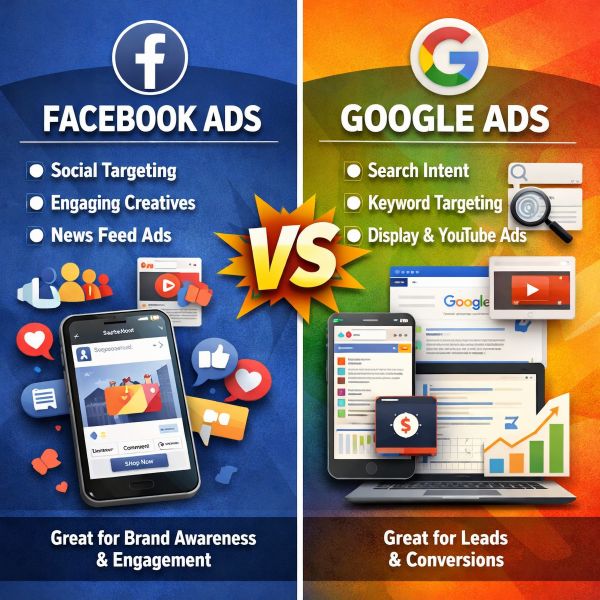
Answering the questions above will give you a better idea of which advertising platform is best for your business. When comparing Google Ads vs Facebook Ads, the decision ultimately comes down to your business goals. If your goal is to improve brand awareness and engagement, Facebook Ads can be an excellent advertising platform for your business. On the other hand, Google Ads can be a great choice if your business goal is to generate leads and conversions.
To help you decide which platform is right for your business, you can book a call or contact us at My Digital Marketing Help. We help set up and manage Google Ads and Facebook Ads campaigns, so you don’t have to worry. Whether you own a B2B or B2C business, we provide solutions to help you generate leads, increase sales, and build brand awareness.

Digital marketing strategy across SEO, AI search, paid media, analytics, conversion optimization and WordPress.