When looking for The Best Digital Marketing Strategies for Small Grocery Stores. Its important to first look at the economics of grocery stores as a whole.
Independent grocery stores have never faced more competition than they do today. Rising inflation has squeezed both consumers and businesses forcing shoppers to become increasingly price-conscious. While grocery stores themselves continue operating on razor-thin profit margins—often around just 2%. Because of this low profit margin. Its very difficult for small grocery stores to keep a fully new website updated all of the time.
Due to inflation and changes of inventory, as well as seasonal products coming and going. A website quickly becomes a living system that requires constant maintenance rather than a one-time investment. Thus a lot of small grocery stores struggle with keeping an update and fully online digital presence. So how can small independent grocery stores market themselves online while also saving money?
The answer is to fully optimize your website with common and easy SEO tactics. Along with a fully tailored and effective content strategy.
Online Marketing Strategies for Grocery Stores
First lets talk about social media marketing for grocery stores. When customers are looking at your Facebook page, they are trying to get the answer for a very common question. “Should I visit your store today? or not?”
However, lets be honest about one thing. Most people don’t go on your Facebook page to be entertained. Instead they are interested in what you can offer them. And when it comes to grocery stores these are often deals, weekly specials, seasonal products, recipes, and ways to save money on their next shopping trip.
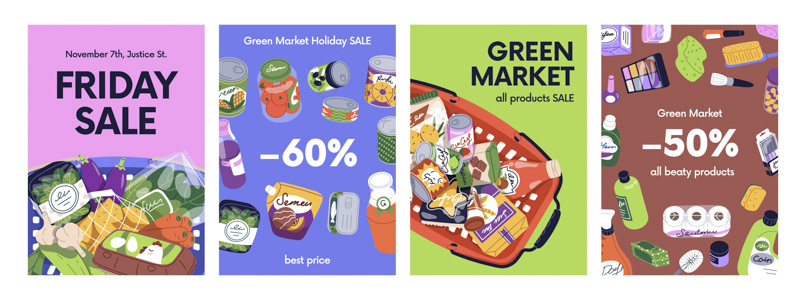
This is where many grocery stores miss an opportunity.
Instead of consistently highlighting what’s currently on sale, what’s in season, or what new products have arrived, some stores devote much of their social media presence to community events, company news, or general brand awareness. While community engagement certainly has value, it doesn’t always create an immediate reason for someone to get in their car and visit the store. Lets look at two examples.
Two Different Marketing Strategies for Grocery Stores
A comparison between Pete’s Market and Whole Foods illustrates two different marketing approaches. Pete’s Market often emphasizes community outreach, local events, and customer engagement. This helps reinforce its identity as a grocery store.

Whole Foods, on the other hand, frequently takes a more product-focused approach. Their social media regularly showcases seasonal produce, weekly promotions, featured products, and recipes that customers can make using ingredients currently available in their stores. Rather than simply telling customers about the brand, they provide practical ideas that encourage customers to purchase specific products.
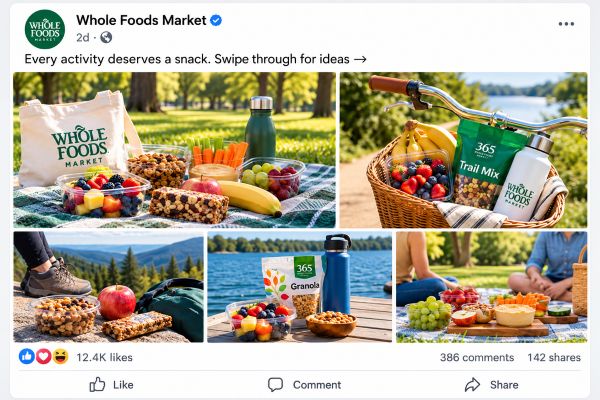
Neither strategy is inherently better than the other.
The important lesson is that every piece of content sends a message and encourages a particular action. A community-focused post may strengthen customer loyalty and brand identity. A recipe featuring seasonal ingredients may inspire someone to stop by the store on their way home from work. A post highlighting weekly specials may convince a price-conscious shopper that your store offers the best value.
The key is aligning your social media content with your business objectives. If your goal is to increase website traffic, then your posts should encourage people to click through to your website. If your goal is to increase in-store sales, your content should highlight products, promotions, recipes, and seasonal offerings that give customers a compelling reason to shop today.
Ultimately, effective grocery store marketing isn’t just about posting consistently—it’s about creating content that drives the specific customer behavior you want to achieve.
Marketing Strategies for Grocery Stores Case Study: Apple Finer Foods
The grocery store Big Apple Finer Foods is a small Independent grocery store in the Lincoln Park neighborhood of Chicago, Illinois. And it has been in business since the 1960’s, yet its digital marketing presence has left a lot to be desired. There are several relatively inexpensive improvements that could significantly increase its visibility in local search results and attract more customers. Let us start with some simple SEO improvements.
1. Optimize the Google Business Profile
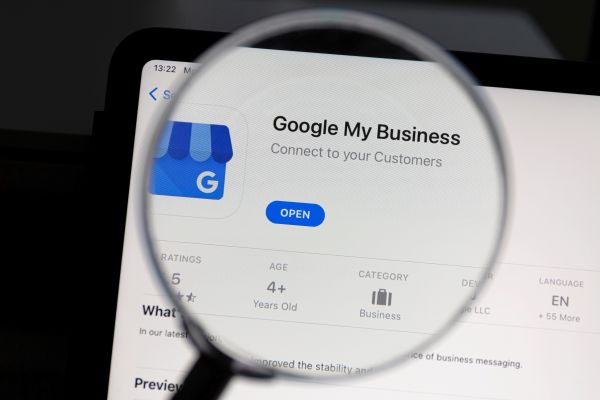
Every good business needs a fully optimized Google Business Profile. However, many profiles go unclaimed or not fully optimized.
Thus, many business owners don’t realize that an unclaimed Google Business Profile can be edited through public suggestions, and Google often fills in missing information using automated data from across the internet. This can result in inaccurate business hours, outdated phone numbers, incorrect categories, or incomplete descriptions.
Once claimed, the profile should be fully optimized with the correct business categories, services, products, and a keyword-rich business description that naturally explains what the store offers and which neighborhoods it serves.
2.Build a Strong Review Strategy
Customer reviews remain one of the strongest local SEO ranking factors.
Rather than waiting for customers to leave reviews on their own, Big Apple Finer Foods should actively encourage satisfied shoppers to leave feedback after each visit.
Responding to every review—positive and negative—not only demonstrates excellent customer service but also reinforces important local SEO signals by naturally mentioning products, services, and the surrounding community.
3.Become Active on Social Media Again
Most people would think that there is no correlation between social media marketing and SEO. However, a social media presence is important for any business. Consequently, when you build a sizeable following on any social media platform it becomes indexed by Google search results. And when your a small business trying to compete with big national corporations, having every advantage when it comes to SEO is paramount.
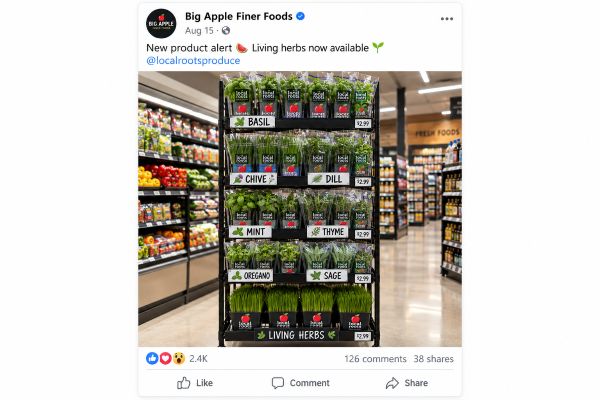
The store’s Facebook page appears to have gone a year without regular updates. From both a customer’s perspective and Facebook’s algorithm, this creates the impression that the business is inactive.
Even posting two or three times each week can dramatically increase visibility over time.
SEO Audit: What the Website Gets Right and Where It Can Improve
To better understand Big Apple Finer Foods website and overall digital presence. We can do an SEO audit using the free online tool SEOPTIMER.
Overall, the website received a C+ rating. While the site successfully provides basic information about the business, the audit revealed several opportunities to improve search visibility.
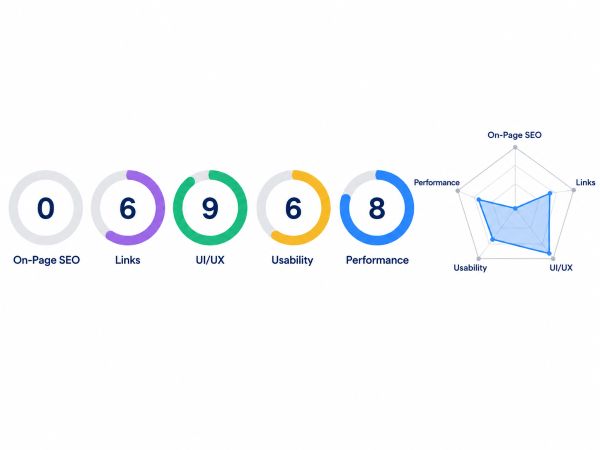
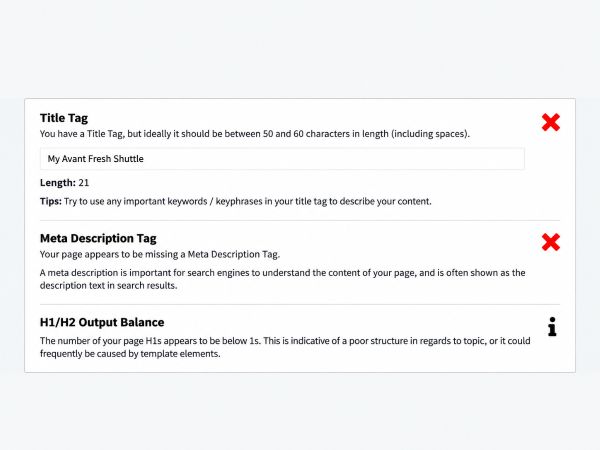
One of the biggest issues is the absence of a Meta Description.
The website’s Title Tag is also too short. It should include valuable keywords such as “Fresh Produce,” “Neighborhood Grocery Store,” or “Chicago Grocery Store.”
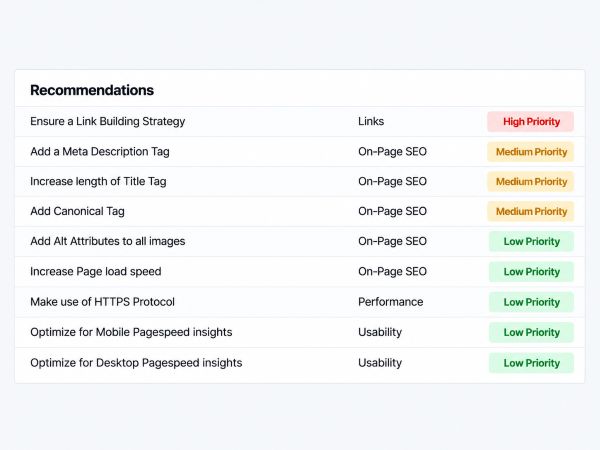
The audit also found that the homepage contains only around 168 words of content. Search engines generally reward websites that provide detailed, informative content. Several images are also missing Alt Attributes, which help both visually impaired users and search engines understand what each image represents.
Another opportunity is improving the site’s backlink profile. Local partnerships, sponsorships, community organizations, food bloggers, and local news articles can all help build authority by linking back to the website. SFinally, while the website performs reasonably well from a technical standpoint, it should become an active marketing tool rather than simply an online brochure.
Regular blog posts, seasonal recipes, weekly promotions, and community updates would continuously generate fresh content for Google to index while giving customers more reasons to visit the website.
Looking Ahead: Why a Grocery Store App Could Be the Next Big Investment
Once a grocery store has fully established itself online. Optimized its Google Business Profile, and managed to attract plenty of customers. The next move should be either investing in a mobile app or using one already built to market your business.
According to research from the Food Industry Association (FMI), grocery store apps are becoming increasingly important in influencing where customers choose to shop.
Many consumers now use apps to browse weekly specials, compare prices, clip digital coupons, build shopping lists, and receive personalized offers before they ever enter a store.
For larger grocery chains, mobile apps have become an essential part of customer loyalty.
But what if an independent grocery store simply can’t afford to build one?
What If You Can’t Afford to Build an App?
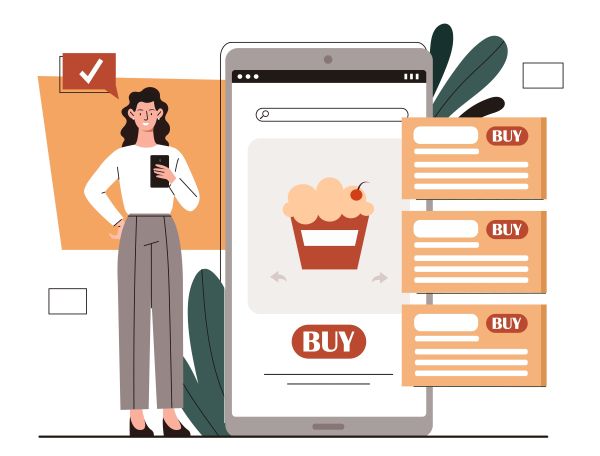
This is where technology becomes an equalizer. Instead of developing a custom application from scratch, independent grocery stores can leverage existing platforms such as Flashfood and Too Good To Go.
These apps allow grocery stores to sell surplus food, near-expiration products, and clearance items directly to customers who are actively looking for discounts. Rather than throwing away perfectly edible food, businesses can recover revenue while helping families save money. Now imagine combining those apps with social media.
A grocery store could post a short Facebook or Instagram video every morning showcasing today’s discounted produce, bakery items, meat specials, or clearance products. At the end of the video, customers are directed to Flashfood or Too Good To Go, where they can immediately purchase those items before they’re gone.
- This creates a powerful partnership between small businesses and technology companies.
- Customers save money during a time of rising food prices.
- Grocery stores reduce food waste while increasing revenue.
- Technology platforms expand their user base.
- Communities benefit by keeping more food out of landfills.
Most importantly, this demonstrates that digital marketing isn’t always about creating brand-new technology. Sometimes it’s about creatively connecting the technologies that already exist.
In Conclusion
For many independent grocery stores, competing with billion-dollar companies can seem impossible. But successful digital marketing isn’t about spending the most money—it’s about making it easier for local customers to discover your business, understand what makes it unique, and give them a reason to visit.
Throughout this article, we’ve seen that relatively small improvements can make a significant impact. Optimizing a Google Business Profile, collecting customer reviews, improving website SEO, posting engaging videos, highlighting weekly specials, and maintaining an active social media presence all contribute to stronger local visibility.
Digital marketing isn’t replacing the neighborhood grocery store. It’s giving it the tools to compete. At My Digital Marketing Help, we help small grocery stores with the best digital marketing strategies so they can compete online. Contact us or book a call to speak with our team for a free consultation.

Digital marketing strategy across SEO, AI search, paid media, analytics, conversion optimization and WordPress.